Dinner
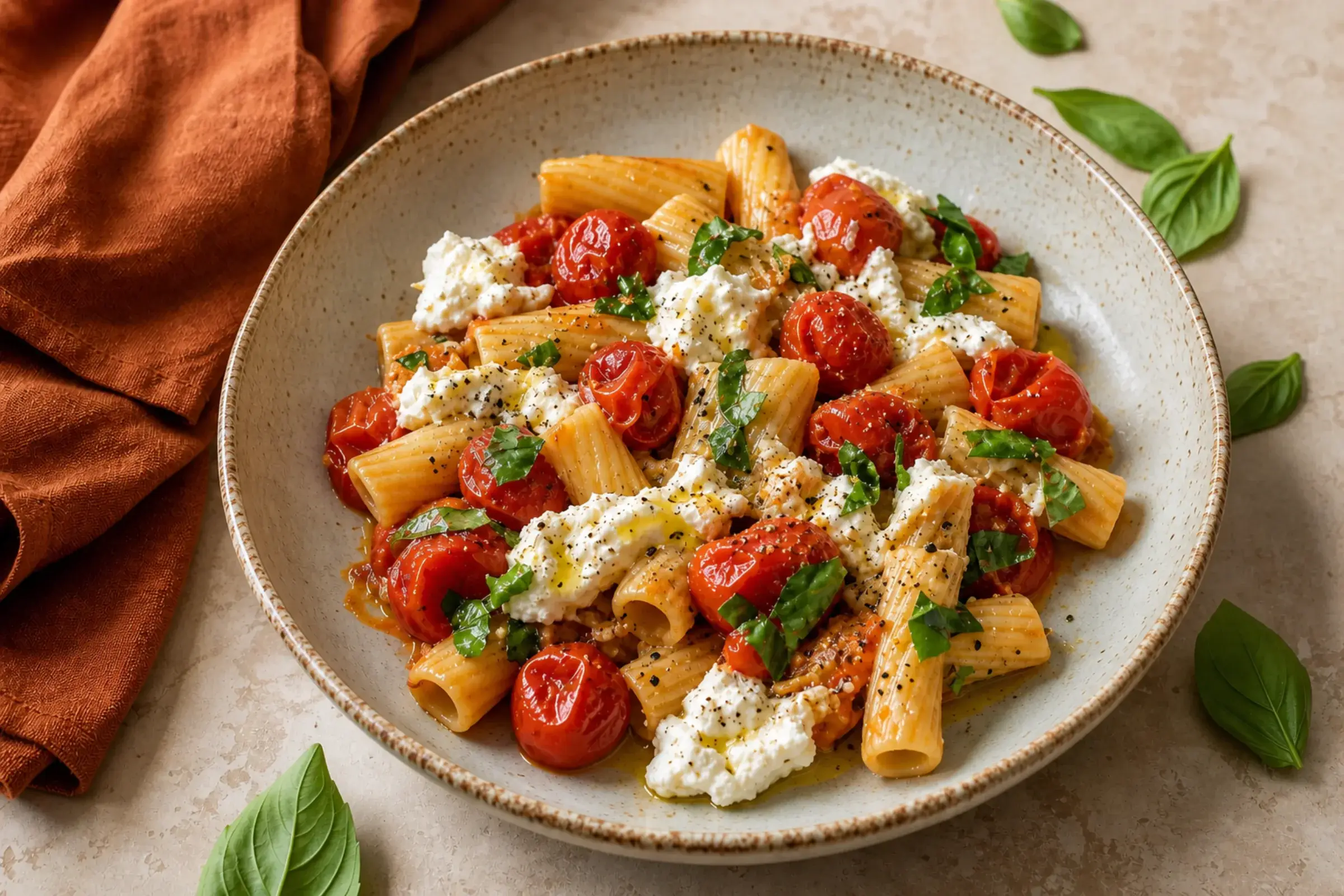
Blistered Cherry Tomato Rigatoni
Jammy burst tomatoes, cool ricotta, and a fistful of basil make this weeknight pasta feel considered without slowing dinner down.
At the table
Before you cook
Some evenings, dinner needs to feel generous without asking much more than one pot and a skillet. This rigatoni suits that particular hour: cherry tomatoes collapse into a glossy sauce while cool ricotta waits to soften over the hot pasta.
The pleasure is in the contrasts—sweet tomatoes and sharp Parmesan, sturdy ridges and creamy spoonfuls, warmth lifted by torn basil. It is relaxed enough for a weeknight, but a wide bowl and a final turn of black pepper give it a little sense of occasion.
Make it yours
Adjust the recipe
How to make it
Method
Blister the tomatoes
Bring a large pot of well-salted water to a boil. While it heats, warm the olive oil in a wide skillet over medium-high heat. Add the tomatoes and cook, stirring only occasionally, until blistered and beginning to collapse, 8 to 10 minutes. Remove the skillet from the heat while the pasta cooks.
Cook the pasta
When the water boils, add the rigatoni and cook until just shy of al dente, about 2 minutes less than the package directs. Reserve 1½ cups of pasta water, then drain.
Build the sauce
Return the skillet to medium heat. Add the garlic, measured salt, and red pepper flakes. Cook for 1 minute, then gently crush about half of the tomatoes with the back of a spoon.
Finish the pasta
Add the drained rigatoni and ¾ cup of the reserved pasta water. Toss until the sauce looks glossy and clings to the pasta, 2 to 3 minutes, adding more pasta water a splash at a time if needed.
Fold and serve
Remove from the heat. Fold in the Parmesan and half of the basil. Divide among shallow bowls, spoon ricotta over the top, and finish with the remaining basil and black pepper.
Beyond the method
Kitchen notes
The wide skillet matters more than a hard sear. Giving the tomatoes room lets their skins blister while the juices reduce instead of turning watery.
Make it your own
Use short, ridged pasta that can carry the loose sauce. Pecorino can stand in for Parmesan; taste before adding more salt because it is usually sharper and saltier.
Leftovers
Refrigerate pasta and ricotta separately in covered containers for up to 3 days. This is a conservative window within the USDA’s 3-to-4-day guidance for cooked leftovers. Loosen the pasta with a splash of water when reheating, then add the ricotta after it is hot.