Baking
Lemon Olive Oil Cake
A tender, citrus-forward cake with a sugar-crusted edge and enough olive oil character to keep every slice interesting.
At the table
Before you cook
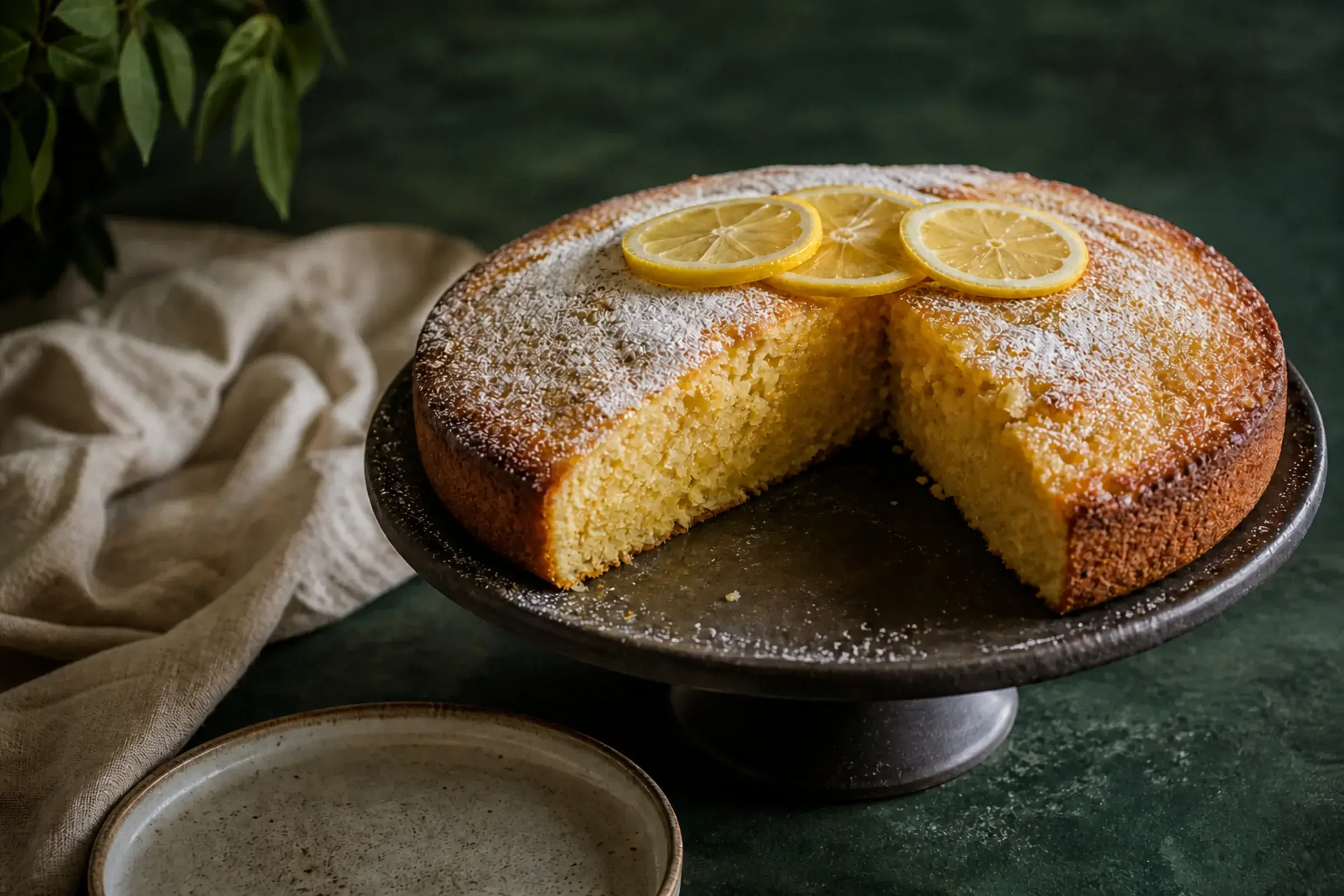
There is something quietly celebratory about a cake that does not need frosting or layers to hold the table. This one relies on lemon zest, fresh juice, and olive oil, with a sugar-crusted edge that gives each tender slice a little contrast.
It fits the unhurried moments—a late cup of coffee, an afternoon visit, or the last course of a simple dinner. A light veil of powdered sugar is enough; the golden top and bright citrus can do the rest.
Make it yours
Adjust the recipe
Batch size
10 slices · fixed batchHow to make it
Method
Prepare the pan
Heat the oven to 350°F (175°C). Brush a 9-inch (23 cm) round cake pan with the olive oil for the pan. Line the bottom with parchment, brush the paper lightly with oil, then coat the inside with the sugar for the pan.
Mix the dry ingredients
Whisk the flour, baking powder, and salt in a medium bowl until evenly combined.
Whip the eggs
In a large bowl, beat the eggs and granulated sugar with an electric mixer on medium-high until pale, thick, and increased in volume, 3 to 4 minutes.
Add the liquids
With the mixer on low, slowly stream in the olive oil. Mix in the milk, lemon zest, lemon juice, and vanilla just until smooth.
Fold the batter
Add the dry ingredients in two additions, folding gently with a flexible spatula after each. Stop as soon as no dry streaks remain.
Bake and cool
Pour the batter into the pan. Bake until the top is golden and a tester inserted in the center comes out with a few moist crumbs, 40 to 45 minutes. Cool in the pan for 15 minutes, then turn out onto a rack and cool completely. Dust with powdered sugar and add thin lemon slices, if using, just before serving.
Beyond the method
Kitchen notes
Choose an olive oil you enjoy on its own. A mild, fruity bottle lets the lemon lead; a peppery oil makes the finished cake more savory and pronounced.
Protect the crumb
Once the flour goes in, fold only until the batter is uniform. Overmixing can trade the cake’s tender crumb for a tighter one.
Keep and serve
Let the cake cool completely before covering it so trapped steam does not dampen the top. Dust with powdered sugar just before serving so the surface stays clean and dry.